
Variance
Hope Is Not a Strategy

In late 2019, word was being whispered that a strange new virus was spreading in China. My siblings and I attended a fund-raising event that fall. We won our bid on a Colorado mountain cabin that would hold the five of us for a retreat the following summer. Chris, our only brother, set the agenda—he would teach us Texas Hold ‘Em. He had been playing poker for years and poker had extinguished the pleasure he once took in a simplified bridge-like game we’d played as kids. He told us now it was poker or nothing. We sisters were game to learn. Hadn’t we all belted out that country song at one time or another, confident we did know when to hold ‘em, know when to fold ‘em. With three divorces and three husbands’ deaths among us, we sure as shooten’ knew when to walk away.
I also thought I knew all there was to know about luck and its two categories, good and bad. There are rabbit’s feet to mitigate the bad, and toasts to celebrate the good. Also luck comes from somewhere, right? So if we behaved just right we could get more of the good kind and sidestep the bad—walk under ladders, avoid black cats, knock on wood. It wasn’t until I learned to play poker that I heard of luck’s more implacable cousin variance.
My siblings and I sadly cancelled our retreat to mountains and poker after Covid reached the USA. But by the following summer, we were being reassured that the danger had passed, the pandemic was over, and we could take up our sweet lives again. What a relief. We jumped on planes and flew to Denver.
The Denver airport’s major reconstruction project, started in 2018, had ground to a halt with the supply chain breakdowns of Covid. Thousands upon thousands of us, like dogs let out of the crate, descended on the half-finished Denver terminal. Lines at the ticket counters and TSA snaked through dusty, plastic-draped hallways. The restaurants were shuttered.
My sister Jane and I arrived ready for a quick airport lunch. We wandered, squeezed through lines—excuse me, excuse me--getting hungrier, until we finally subsided into faint whimpering as we ate our Delta cookies on the way to baggage claim. We met our brother and one sister there. Another sister was delayed because her suitcase got lost. (She eventually met up with it back in Portland when she got home.)
We sympathized with her bad luck and loaned her toothpaste, shirts and underwear. But we were all glad to be traveling again. We laughed at life, which was so jolly and unpredictable.
“What are the chances!” we exclaimed, little knowing of what we spoke. Then we began our poker lessons. That’s when we learned that variance controls the cards that show up.
Variance is probability. Variance is pure statistics. You can’t manipulate it onto your side. If you flip a coin and it turns up heads 75 times in a row, the next toss is still a 50-50 chance.
Annie Duke, a professional poker player who entertains at fund raiser tournaments, once looked at the cards of the last two players standing. Player B was behind, she announced—he had only an eighteen percent chance of getting the card he needed to win. Up came that card.
The crowd erupted. (This was a much rowdier fundraiser than any I’ve ever been to.) “You were wrong!” someone shouted.
“I wasn’t wrong,” Annie said. “You just got to see what eighteen percent looks like.”
You’re holding a pair of aces and a dolt at the table has held onto a five and an eight for some unfathomable reason and beats you with that raggedy-ass two pair. You hit a full house on the flop and the guy across from you has the same cards you have—the exact same cards—what are the chances! You bet each other up and then you have to share the huge pot that was going to save your poker life that night.
Variance is the very devil. But variance has life lessons for us, if we pay attention.
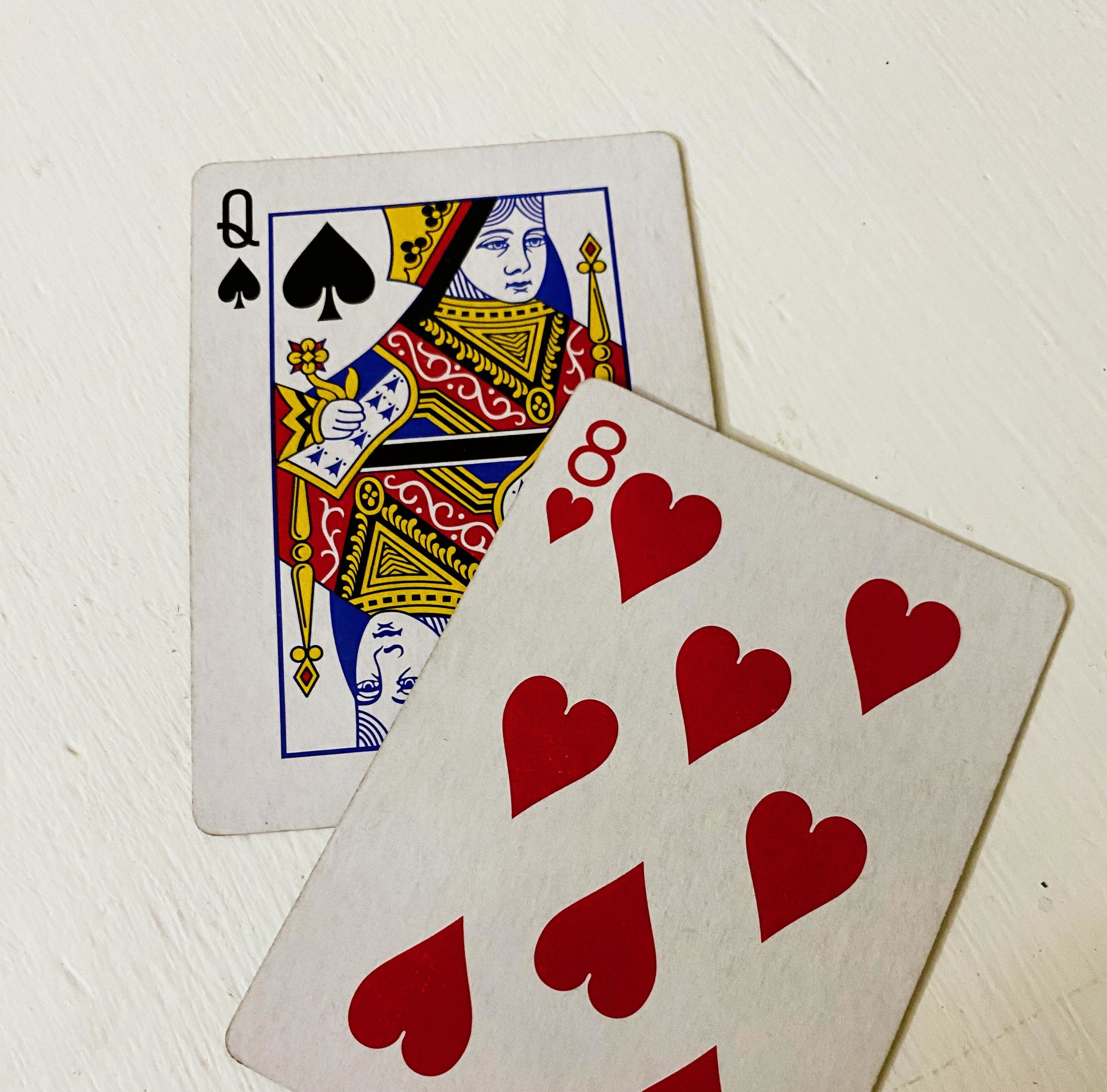
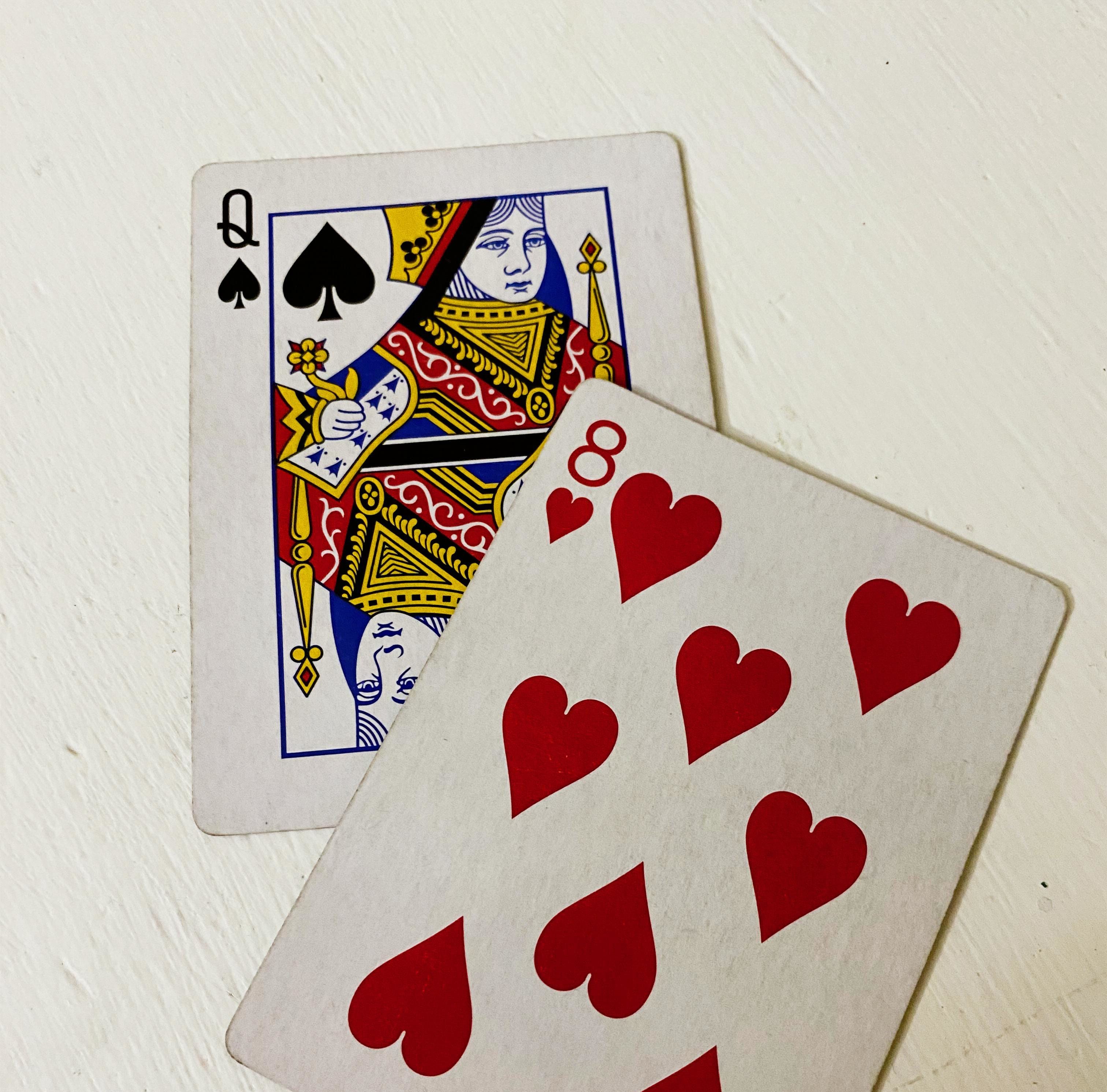
When I went down with a Queen-eight, my brother said, “That pair has a name: A Bitch Called Hope. And hope is not a strategy. Don’t over-value your high cards.” Have I ever over-valued my high cards in life? You can bet your bottom dollar on that.
“You ran into a buzz saw,” he said, when a sister got bold, tried to push everyone off with a bluff and got beat by a sister with pocket kings.
“Who do you think you’re fooling with that weenie value-bet?” he asked the sister who had the flush and only bet the minimum.
I’ve also learned about tilt. The expression comes from people losing at pinball, who tip the machine in frustration. Tilt in poker is when emotion takes over—either euphoria or despair. Walk around the block, don’t keep playing. That’s the advice. But is it easy to follow? No, of course it isn’t. None of this is. In poker or in life. There’s a story about someone who got mad in a poker game and bit the table. He bit so hard, his teeth got stuck in the table and they had to call an emergency dentist.
I also learned about bad beats, when you have the odds in your favor, but variance strikes and the other guy wins. The main lesson about bad beats is that nobody wants to listen to you rehearse your bad beats.
I tried to practice that poker wisdom when things went wrong with construction on my house. The first few problems, sure, it was fine. Roll my eyes, make a party story out of it, find people to laugh ruefully with me about it. But after a while, I could see in people’s eyes a growing disbelief. Hadn’t I run into some crazy problem just the week before? Now what? I could see that they thought I was exaggerating. It couldn’t be that bad. Or, floating up in my friends’ minds was that old, old suspicion that we can control our luck if we just try hard enough. Could I have that much bad luck unless I was asking for it?
We put on brave faces about our setbacks. We read books on resilience. We gird our loins and wade in again. But we really, really, really hate the fact that we can’t control the future. Heck, we can’t even guess the future, and though we say we should have known, we couldn’t have. I should have looked back at my seat before I disembarked the plane. I should have checked one more time before I made that left turn. I should have taken those vitamins, those minerals. I should have ordered the miracle cure in that video. I should have prayed harder.
All of this with no evidence at all that what we do will save us from pain. We carry a heartbreakingly powerless hope that if we try hard enough, we can get through life without suffering.
The theologian who wrote Why Bad Things Happen to Good People was only writing the latest chapter in the human attempt to understand why. His title is a best seller. He could have saved himself a lot of time and just written the answer, VARIANCE, on every page. He may have done that. I bought the book but never opened it. And
by the time it was all over, my extended family had notched over a dozen cases of Covid.